Hiring the wrong new home construction company in Countryside, IL costs more than money; it costs months of change orders and a house that doesn't hold up. Pro One Builders Group has pulled permits and managed crews across Countryside and the western Cook County suburbs, and the pattern repeats: the lowest bid is rarely the safest one. Here's what actually separates a builder worth hiring from one worth skipping.
Reviewed by the Pro One Builders Group project management team, led by Luke, a licensed and insured general contractor serving Countryside, IL and the western Chicago suburbs. Questions about a specific project? Contact us directly.
Visit Pro One Builders Group to see our services and request a free estimate.
How to Vet a New Home Construction Company Before You Sign Anything
Vetting a contractor properly takes a few deliberate steps, not a single phone call and a handshake.
- Check licensing and insurance first. Confirm the company is licensed and insured before any conversation about pricing starts.
- Pull up the portfolio. Look for a clear, dated project history, not just glossy renderings.
- Call a past client. Ask whether the builder hit the agreed timeline and budget, and whether they'd hire them again.
- Get at least three written quotes. Compare scope line by line, not just the bottom-line number.
- Read the contract before you sign. Confirm allowances, change-order terms, and payment schedule in writing.
A builder who hesitates to hand over a license number or a reference is telling you something. Move to the next candidate. The National Association of Home Builders advises that buyers "should shop for your builder as carefully as you shop for your home," whether it's a custom-built house or a traditional subdivision home , and its consumer checklist adds a practical filter most buyers skip: it usually takes three to five years in business to establish a financially sound construction company . Ready to compare numbers against a real bid? Request a free estimate and see where your project stands.
Why Construction Quality and Track Record Matter More Than Price
Choosing a builder on price alone is a common and expensive mistake. The cheapest bid can mean corners cut on materials or crews stretched across too many jobs at once.
Construction Quality
A builder's construction quality shows up in three places: the grade of materials used, the experience of the trade crews on site, and how rigorously each phase gets inspected before the next one starts. Craftsmanship isn't just a finish-level detail. It's woven into the framing, the mechanical rough-ins, and the foundation work most buyers never see.
Reputation and Track Record
The most reliable way to evaluate a builder is to look at what they've already built. Established builders carry a portfolio of completed projects that reveals their design range and craftsmanship firsthand, not just in a sales pitch. Reviews and local reputation fill in the rest: reliability, communication, and whether past clients would hire the builder again. Before signing anything, review a completed projects portfolio and talk to at least one past client directly.
Local Market Expertise in Countryside and the Western Suburbs
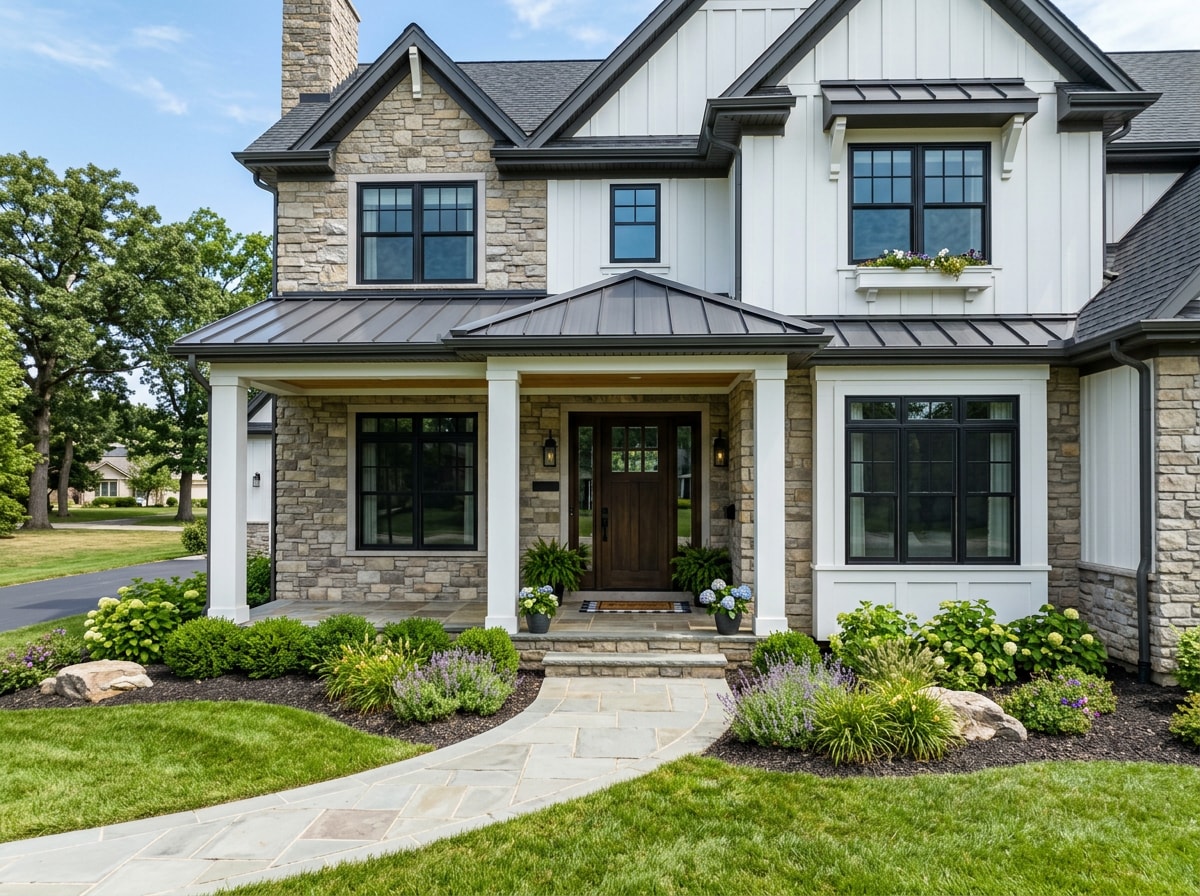
A builder's familiarity with Countryside and surrounding Cook County communities affects nearly every part of a build, from lot selection to resale value. The local new-construction market here isn't small: there are currently 46 builders to choose from across 135 new communities and subdivisions in the Countryside area , with new home pricing starting around $328,990 . That range of competition is exactly why vetting matters more than ever.
Many neighborhoods nearby carry architectural requirements or HOA guidelines, and a builder who already works within those rules avoids costly redesigns later. Local market knowledge also helps buyers spot which builders have a genuinely strong reputation in specific communities, including La Grange, Hinsdale, and Western Springs.
Zoning, Permits, and the Cook County Process
New construction in Cook County runs through a defined regulatory process, and a builder who already knows it saves homeowners real time. Zoning laws govern what can be built where, setback requirements dictate how close a structure can sit to property lines, and height restrictions vary by municipality.
A typical Countryside-area build moves through plan review, a zoning compliance check, and staged inspections before occupancy is approved. In our experience managing projects through this pipeline, plans that are complete on first submission move through review noticeably faster than ones that need repeated resubmission. The Cook County Building Department requires a permit for most structural, electrical, mechanical, and plumbing work , and inspections are scheduled as work progresses, covering foundations, framing, MEP rough-ins, and finals . Builders who already have working relationships with local building departments tend to move through this process faster than those encountering it for the first time. For current requirements, check the Cook County Department of Building and Zoning.
Production Builders vs. Custom Builders
Production builders typically construct homes within a planned community using a limited set of floor plans. That repetition usually means faster timelines and lower costs than a fully custom build. Custom builders work differently: homes are built on individually selected lots, with the builder evaluating lot size, topography, and local zoning before design even begins.
| Factor | Production Builder | Custom Builder |
|---|---|---|
| Floor plans | Limited, pre-set options | Designed around your lot |
| Typical timeline | Faster, repeatable process | Longer, more variables |
| Lot control | Builder-owned subdivision lots | Buyer-selected, any eligible lot |
| Design flexibility | Low to moderate | High |
| Best fit for | Predictable budget and timeline | A specific lot or a custom vision |
Neither approach is better outright. It depends on whether you value speed and predictability or a home designed around a specific piece of land. If you're weighing that decision for a lot in the area, our custom home builder cost and permit guide for Darien, IL walks through the full budget and permit timeline side by side.
What Services Should a Full-Service Builder Offer?
A full-service new home construction company typically covers design consultation, site evaluation, construction management, and finish-out selections through services like custom carpentry and general contracting. Within that range, two tiers come up most often with Countryside-area buyers: luxury builds and energy-efficient construction.
Luxury Home Building Options
Buyers chasing a high-end result usually focus on builders who specialize in custom design and premium materials. These builds tend to offer more personalized service and greater architectural flexibility than a standard production build, since every decision, from layout to finishes to systems, gets tailored rather than chosen from a preset list.
Energy-Efficient Homes
Energy-efficient homes combine upgraded insulation, high-efficiency HVAC systems, and high-performance windows to cut utility costs through Illinois winters and summers alike. ENERGY STAR-certified homes integrate energy efficiency from the ground up to perform at least 20% more efficiently than homes built to code . Current residential efficiency standards and certification criteria are outlined by ENERGY STAR's Single-Family New Homes program.
Steps to Hire the Best Builder for Your Lot
Once you've narrowed your list, the final decision usually comes down to fit, not just price.
- Compare written quotes line by line, including allowances for cabinets, flooring, and fixtures.
- Ask how change orders are priced and documented.
- Confirm who manages subcontractors and how often you'll get updates.
- Walk a current job site if the builder allows it.
If a bid looks unusually low, ask what's excluded. That's almost always where the gap gets made up later. Request a free estimate from our team, and we'll walk through your lot, budget, and timeline together.
FAQ
What should I look for in a new home construction company in Countryside, IL?
Look for a licensed, insured builder with a verifiable project portfolio, transparent communication, and local experience with Cook County zoning and permitting.
Why choose a local home builder instead of a national production builder?
Local builders understand zoning, permitting, and neighborhood design standards, and they already hold working relationships with area subcontractors and inspectors.
How much does it cost to build a new home near Countryside, IL?
Pricing varies widely by lot, size, and finish level. New construction in the Countryside area currently starts around $328,990 , though custom builds on individually selected lots often run higher.
How long does new home construction take in Cook County?
Timelines depend on plan complexity and how quickly permit review clears. Builds that pass plan review on the first submission generally move through staged inspections, foundation, framing, MEP rough-ins, and finals, on a predictable schedule.
What's the difference between a production builder and a custom builder?
A production builder uses a limited set of floor plans in a planned community, which usually means faster timelines and lower costs. A custom builder designs around your specific lot, offering more flexibility but a longer process.
Why choose a design-build firm over hiring separate contractors?
A design-build firm combines planning, design, and construction under one point of contact, which tends to reduce miscommunication and keep the schedule on track from planning through final completion.