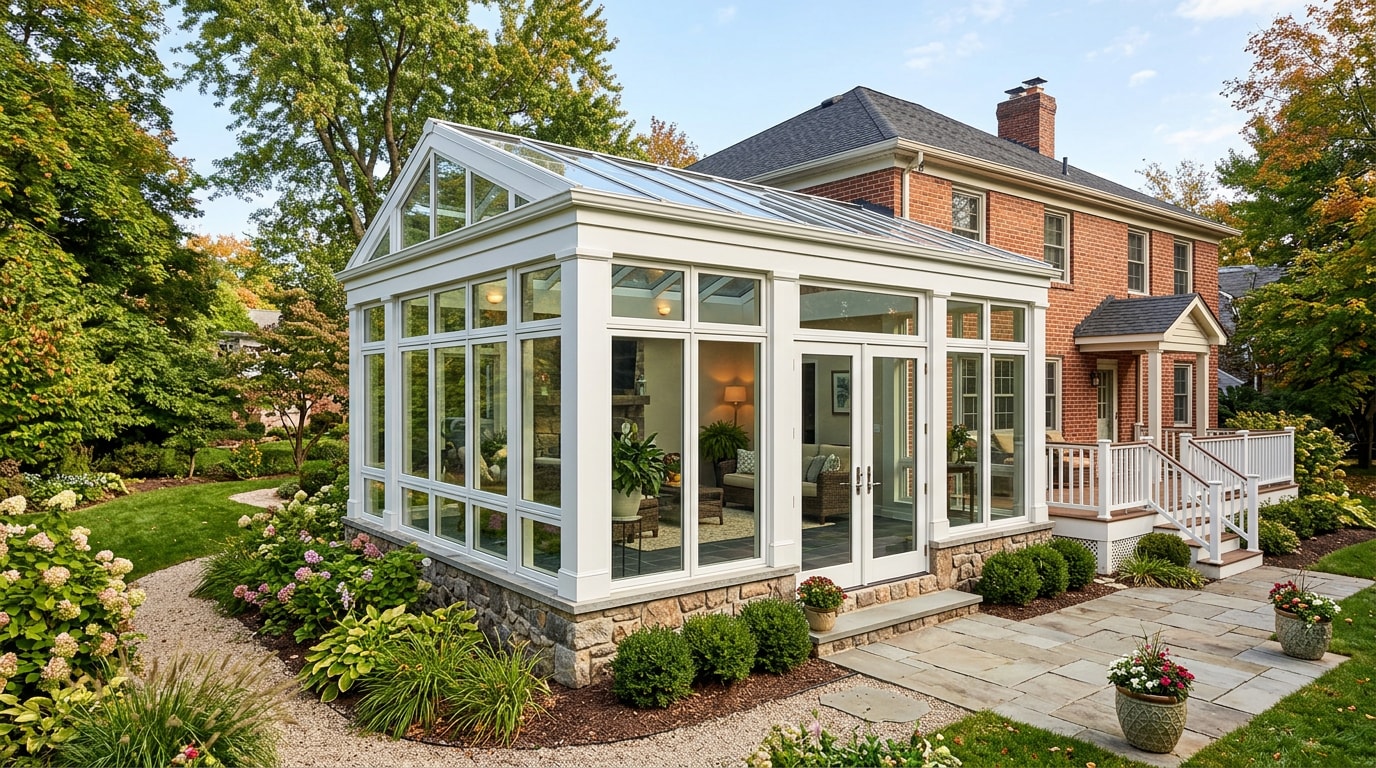
Shopping for sunrooms for sale in Oak Brook, IL means choosing between two very different products: a seasonal glass room for spring through fall, or a fully insulated four-season addition built for Chicago-area winters. The right choice changes your budget by tens of thousands of dollars and hinges on foundation type, glass package, and whether you build custom or from a kit. This guide breaks down both options, realistic local cost ranges, and the build details that separate a sunroom that lasts from one that leaks heat by December.
Visit Pro One Builders Group to see our services and request a free estimate.
What Are 3-Season and 4-Season Sunrooms?
Most sunrooms sold around Oak Brook fall into two categories: three-season rooms built for milder months, and four-season rooms engineered for DuPage County's full temperature range. Knowing the difference shapes your budget and how you'll actually use the space.
3-Season Rooms
A 3-season sunroom has screened or single-pane windows with no insulation or heating, used spring, summer, and fall, and is the most popular choice for budget-conscious homeowners. It's a lower-cost entry point for extra lounging or hobby space, not a year-round living room.
In Oak Brook, where fall evenings get chilly fast, homeowners often use a seasonal sunroom as a reading nook or plant room rather than year-round living space. That's a sensible fit for buyers prioritizing budget over winter usability.
4-Season (All-Season) Rooms
A 4-season sunroom has insulated walls, double- or triple-pane windows, and heating and cooling capability, making it a true year-round living space. For Oak Brook winters, that means the room can double as a home office or family room in January, not just June.
Illinois energy code backs this up with real numbers, not marketing language. For sunrooms enclosing conditioned space, the code sets minimum ceiling insulation at R-19 in warmer climate zones and R-24 in colder zones, plus a minimum wall insulation value of R-13. A contractor quoting a 4-season room for Oak Brook should be building to at least those numbers, not guessing at insulation thickness.
| Feature | 3-Season Room | 4-Season Room |
|---|---|---|
| Insulation | Light to none | Full wall and ceiling insulation (code minimums apply) |
| HVAC | Rarely included | Integrated heating/cooling |
| Oak Brook Winter Use | Not recommended | Comfortable year-round |
| Resale Treatment | Treated as bonus/porch space | Often closer to finished living area |
Browse room addition options built for Oak Brook homes before deciding which fits your property, or check our completed projects for examples of finished additions.
How to Choose the Right Sunroom for Your DuPage County Home
The right sunroom comes down to practical questions, not just style. Will you use it year-round or mainly during Oak Brook's milder stretches between April and October? Do you want a permanent living space, a guest suite, or a quiet office?
Factor in ongoing energy costs if you choose a 4-season design with heating and cooling, and weigh resale value. DuPage County buyers tend to respond well to additions that look like a natural extension of the home rather than a bolted-on box. Lot size and HOA setback rules matter too in established Oak Brook neighborhoods, so confirming placement early avoids redesign costs later.
This matters just as much in nearby communities. Homeowners in Hinsdale and Western Springs face the same setback and lot-coverage questions before a sunroom goes to permit.
Setting Your Budget: Sunroom Cost Per Square Foot
A sunroom costs $100 to $350 per square foot on average , and Illinois pricing generally falls within that range depending on materials, insulation level, and seasonal labor costs. The cost to add a 3-season room runs $80 to $230 per square foot, while a custom-built 4-season sunroom runs $200 to $400 per square foot. A basic 3-season room sits toward the lower end of the overall range; a fully insulated 4-season room with upgraded glass and HVAC lands toward the top.
These figures are estimates, not quotes. Actual pricing depends on your home's structure, foundation needs, and the contractor's materials. Sunroom additions can also influence resale value, and national remodeling data offers useful context on how different projects perform at resale. The Zonda Cost vs. Value Report tracks this kind of data across dozens of project types nationwide. A written quote based on your specific Oak Brook property is still the only reliable number.
Sunroom Addition Cost by Size
Size is the biggest driver of total project cost. Building a 3-season room addition costs $8,000 to $50,000, and a 4-season room costs $20,000 to $80,000 to add , with the range reflecting square footage, finishes, and site conditions.
| Size | 3-Season Room | 4-Season Room |
|---|---|---|
| 10x10 (100 sq ft) | ~$8,000-$23,000 | ~$20,000-$40,000 |
| 12x16 (192 sq ft) | ~$15,000-$44,000 | ~$38,000-$77,000 |
| 16x16 (256 sq ft) | ~$20,000-$50,000 | ~$51,000-$80,000+ |
A small 10x10 room sits near the bottom of each range; a larger 16x16 or custom-shaped addition with premium glass and HVAC pushes toward the top. Two rooms of similar size can still carry different price tags once foundation type and HVAC tie-ins are factored in.
Key Factors That Drive Sunroom Cost
Beyond square footage, several line items shape the final price:
- Permits are a near-universal cost.
Sunroom permits typically cost between $250 and $1,500 , and acquiring a permit can take between two and eight weeks depending on your municipality.
- Foundation work (concrete slab versus raised deck) adds labor and material costs upfront.
- Insulation level, roof style, and window quality are the biggest swing factors between a budget room and a premium one.
- Labor availability plays a role too. A contractor juggling multiple projects may quote higher during busy stretches, while slower periods often mean more competitive pricing and faster scheduling.
- Material costs for framing, insulated glass, and HVAC equipment shift with broader supply trends, so a quote from this spring may look different next fall for the identical design.
Seasonal Demand
Construction costs fluctuate by season. Summer is typically the busiest stretch for sunroom additions, so material and labor prices can spike with demand while scheduling stretches out. Planning during late fall or winter often means more contractor availability and better pricing, even if the build happens the following spring.
In our experience quoting room additions across DuPage County villages, the foundation and HVAC rough-in inspections are usually what stretch a project timeline, not the window or glass install. Building that buffer into your schedule from the start avoids a lot of frustration later.
Features of a Quality All-Season Sunroom
Price and performance trace back to a handful of core build components: foundation, frame, roof, glass, windows, and doors. Each one affects comfort day to day and how the room holds up through DuPage County winters.
Illinois building code doesn't treat all sunrooms the same, either. The code splits sunrooms into categories ranging from unconditioned rooms enclosed with screening or plastic film, to unconditioned rooms with glass walls, up to rooms designed to be heated or cooled and either isolated from or open to the main structure. That classification determines which insulation, glazing, and structural rules apply, which is exactly why a "sunroom" quote can mean very different things from one contractor to the next. Ask which category your proposed room falls into before comparing prices.
Foundation
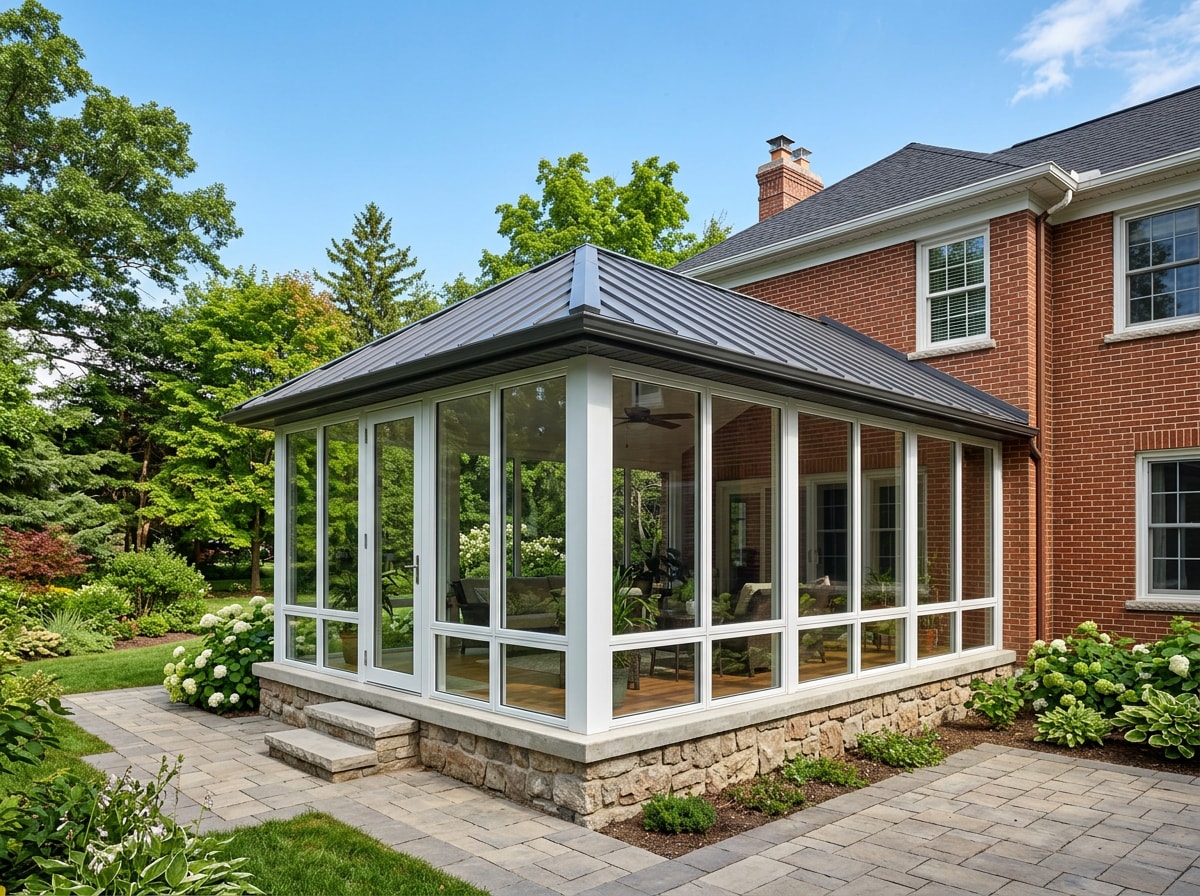
Foundation choice depends on whether the sunroom sits at ground level or is raised off an existing deck. Most permanent sunrooms use a poured concrete foundation and subfloor for stability, while lighter 3-season rooms sometimes sit on an existing wooden deck foundation.
If you're planning an addition in DuPage County, a building permit is required , and Oak Brook's own permitting process layers on top of county and state code. Confirm current footing depth and foundation requirements with your local building department before finalizing plans.
Frame
Frame material affects both price and how well a sunroom holds up to temperature swings:
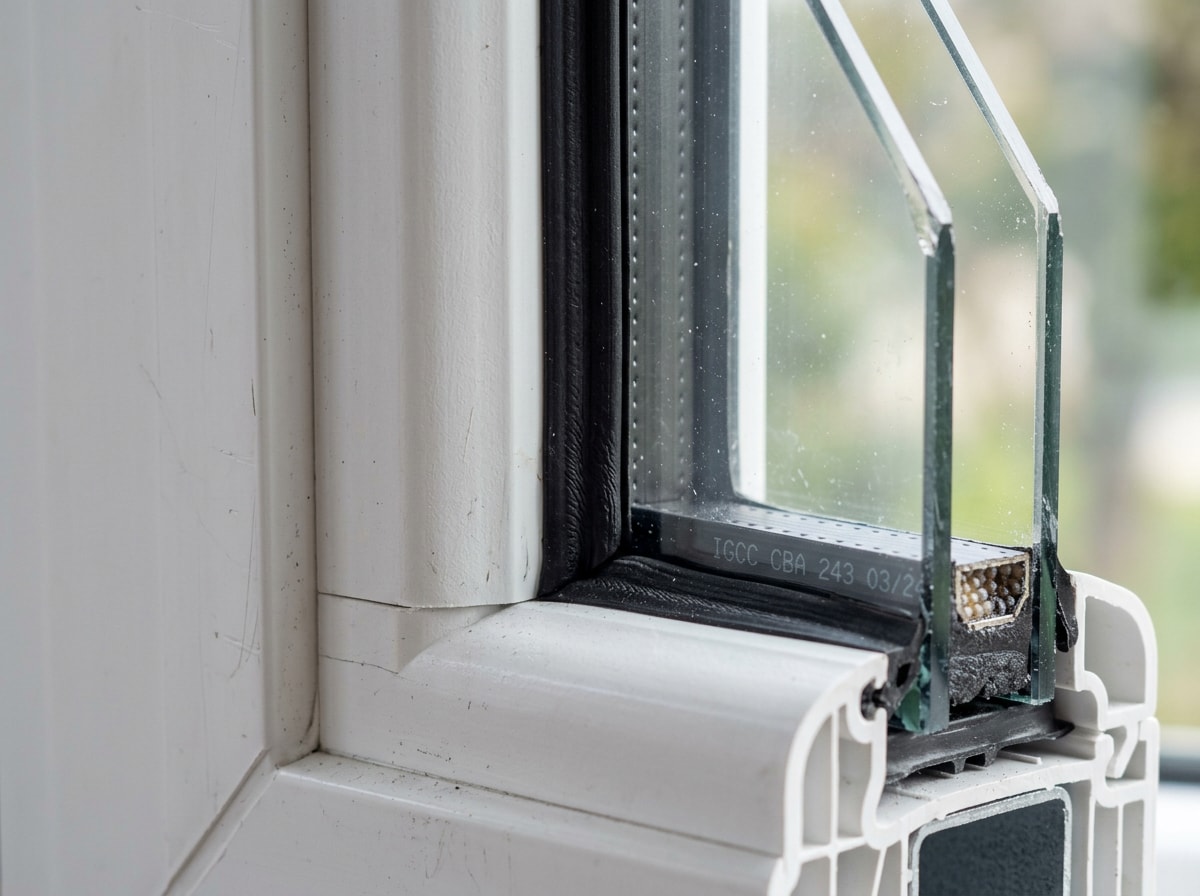
- Aluminum frames are common and budget-friendly but conduct heat and cold readily, which hurts comfort in a 4-season room.
- Insulated vinyl frames offer better thermal performance and are a common standard for 4-season builds in colder climates.
- Wood-framed options offer a traditional look but need more upkeep against moisture.
Custom-Built vs. Pre-Fab Sunroom Kits
Pre-made kits appeal to budget-conscious buyers because they're simpler to order and often cheaper upfront than a fully custom design. The tradeoff is flexibility: kits limit creative control, may not fit an existing patio footprint perfectly, and finding an installer who executes a specific kit well can be hit or miss.
Custom-built sunrooms cost more but let a contractor match rooflines, siding, and window placement to your actual home. For Oak Brook properties with mature landscaping or uneven grading, that fit often matters more than the sticker-price gap. If you're weighing a sunroom against a larger project, our guide on remodeling contractor hiring and permits in La Grange covers vetting questions that apply just as well here.
Request a free estimate from Pro One Builders to get a real number on custom versus kit pricing for your specific lot.
About This Guide
Pro One Builders is a general contractor serving Oak Brook and the surrounding DuPage County suburbs, including room additions, kitchen and bath remodeling, flooring, carpentry, and painting work. This guide reflects our estimating and permitting experience on local room additions and sunroom builds. You can see examples of our completed work on our projects page or contact our team directly with questions about your property.
FAQ
Does Adding a Sunroom Increase Home Value?
Yes, in most cases. Return on investment varies by build quality, market, and how well the room integrates with the rest of the house, with fully insulated four-season rooms generally retaining more value at resale than basic screened rooms. A written estimate tied to your specific home is the only way to know your actual numbers.
Do I Need a Permit for a Sunroom Addition?
Yes. If you're planning an addition in DuPage County, you must apply for a building permit , and Oak Brook has its own permitting layer on top of that. Requirements vary by village, so confirm specifics with your local building department before construction starts. For the underlying code requirements sunrooms must meet, see the International Residential Code's sunroom provisions.
What Is the Difference Between a 3-Season and 4-Season Sunroom?
The core difference is insulation and climate control. A 3-season room has light or no insulation and no HVAC, so it's only comfortable in mild weather. A 4-season room is fully insulated with energy-efficient glass and heating and cooling, making it usable through Oak Brook's coldest and hottest days, which is also why it costs more.
Does a Sunroom Add Square Footage to a Home?
A sunroom increases usable living area, but it usually doesn't count as official square footage unless it's tied into the home's HVAC system, sits on a permanent foundation, and meets the same structural standards as the rest of the house. This distinction matters at resale, since appraisers often value finished square footage differently than bonus or seasonal space.
How Long Does It Take to Build a Sunroom?
Most sunroom projects run 4 to 10 weeks from permit approval to final inspection , though timelines stretch during busy summer months or if HVAC and electrical subpermits are involved. Adding buffer time for inspections is realistic in most DuPage County municipalities.