Hiring commercial siding contractors in Woodridge, IL takes more homework than picking a residential installer off the first search results page. Office parks, retail strips, and multi-tenant buildings carry higher stakes, stricter codes, and bigger budgets than a single-family re-side. This guide walks through what to verify, what to ask, and which materials make sense for a DuPage County building before you sign anything.
Experience and Expertise in Commercial Projects
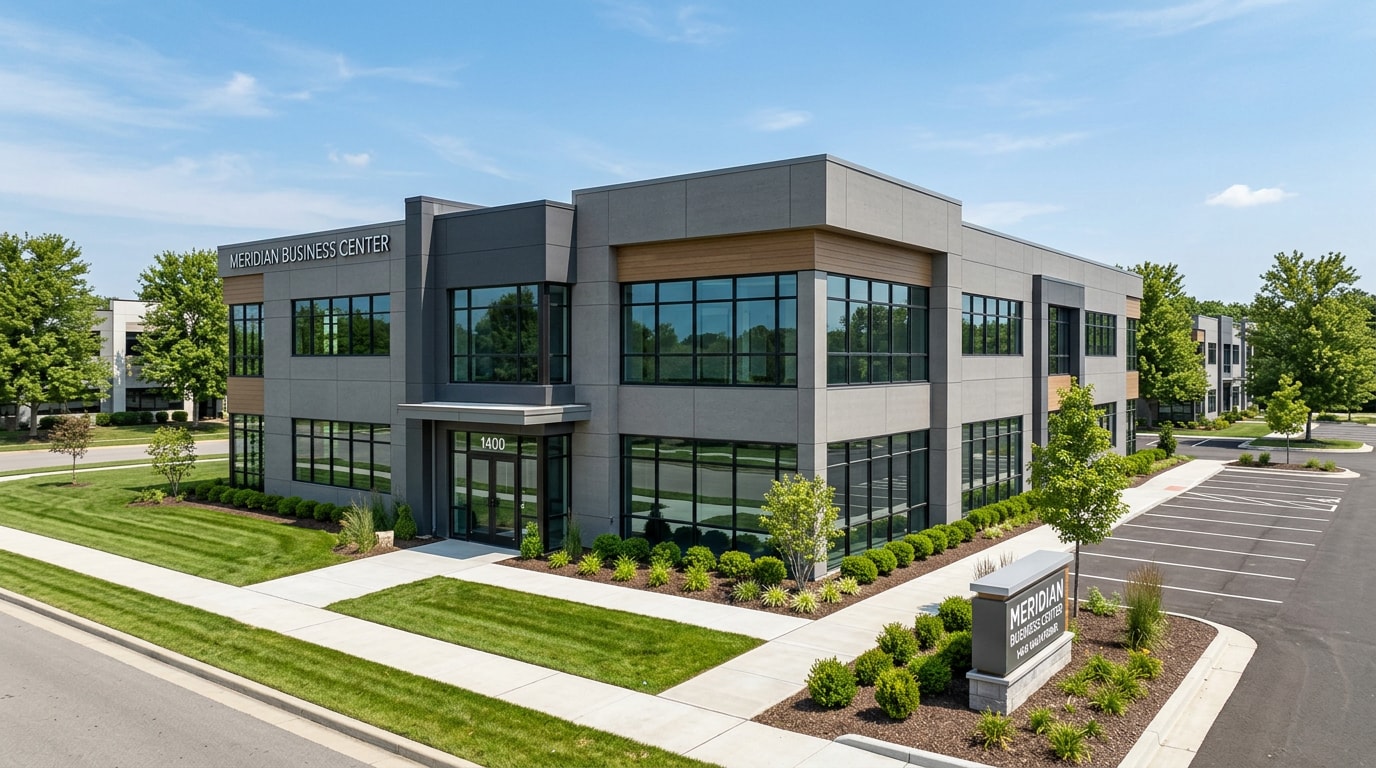
Commercial siding work isn't a bigger version of a residential re-side. It's a different discipline. Crews have to work around active tenants, coordinate phased scheduling so a storefront stays open, and follow stricter safety protocols on multi-story or occupied structures.
A contractor who mainly handles single-family homes may not have the crew size, equipment, or permitting familiarity that multi-unit buildings, retail centers, and industrial facilities demand. On a recent multi-tenant retrofit near the DuPage County corridor, our crews phased the installation building section by building section specifically so tenants could stay open through the workday, something a residential-only crew rarely has the scheduling discipline or staffing to pull off.
Before hiring, ask for examples of completed projects on similar building types in or near Woodridge, whether that's an office complex, a retail strip, or a light-industrial facility. A contractor with real commercial siding experience should be able to show you comparable work, not residential photos relabeled as commercial. You can browse completed jobs across the area on our projects page, and see how our team approaches commercial exteriors as part of a full-service general contracting scope.
Crews working above 10 feet on scaffolding also fall under federal fall-protection rules. OSHA's scaffolding standard requires fall protection or fall arrest systems for every employee working more than 10 feet above a lower level , which is one more reason a commercial-grade crew needs documented safety training, not just a ladder and good intentions. Ask any contractor how they handle OSHA scaffold compliance on occupied buildings before work starts.
Licensing, Insurance, and Manufacturer Certifications
A trustworthy commercial siding contractor should hold an active business license, carry liability insurance and workers' compensation coverage, and maintain manufacturer certifications from brands like James Hardie or GAF. These credentials protect you from liability if something goes wrong mid-project and confirm the crew is trained on the materials they're installing.
Illinois doesn't issue a single statewide "general contractor" license the way some states do, but roofing and certain exterior trades are regulated, and many DuPage County municipalities require local registration or permits before work begins. Ask any prospective contractor for their registration number and current certificate of insurance, and confirm both directly instead of taking a verbal assurance at face value. The Illinois Department of Financial and Professional Regulation's license lookup tool can confirm standing in minutes, free of charge.
Before you let a crew near your building, confirm these four things:
- An active license or local registration
- A current certificate of liability insurance
- Workers' compensation coverage
- Manufacturer certification for the specific siding product being installed
Ask the contractor to email documentation rather than just describe it over the phone. A legitimate company will have no problem providing it.
Check References and Reputation
Star ratings tell you how people felt. Past clients can tell you what actually happened. Talking directly to a contractor's previous commercial customers reveals whether timelines held, communication stayed clear, and the final invoice matched the original estimate, details a five-star review rarely captures.
Checking Google reviews and Better Business Bureau ratings is still worthwhile, but treat them as one data point among several rather than the deciding factor. A contractor with strong online reviews and solid commercial references together is a much safer bet than one with just the former.
When you call a listed reference, ask:
- Was the project completed on time and within the original budget?
- How did the contractor handle unexpected issues or change orders?
- Would they hire the same crew again for a future commercial project?
Vague or hesitant answers are worth noting.
Request Detailed Proposals and Transparent Pricing
A trustworthy commercial siding estimate should spell out the full cost breakdown, the exact materials and brands being used, a realistic project timeline, and written warranty terms for both materials and labor. Comparing proposals on these four points matters far more than chasing whichever number is lowest on the page.
A solid proposal includes:
- A clear, itemized cost breakdown
- Specific materials and brands named by product line, not just "vinyl" or "metal"
- A timeline with project milestones
- Written warranty and guarantee terms covering both the product and the installation labor
Be cautious of any siding proposal that's vague about materials or pressures you to sign on the spot. A contractor confident in their pricing will welcome questions and give you time to compare quotes side by side. Ready to start comparing? Request a Free Estimate to see how a detailed proposal should look.
Types of Commercial Siding Materials
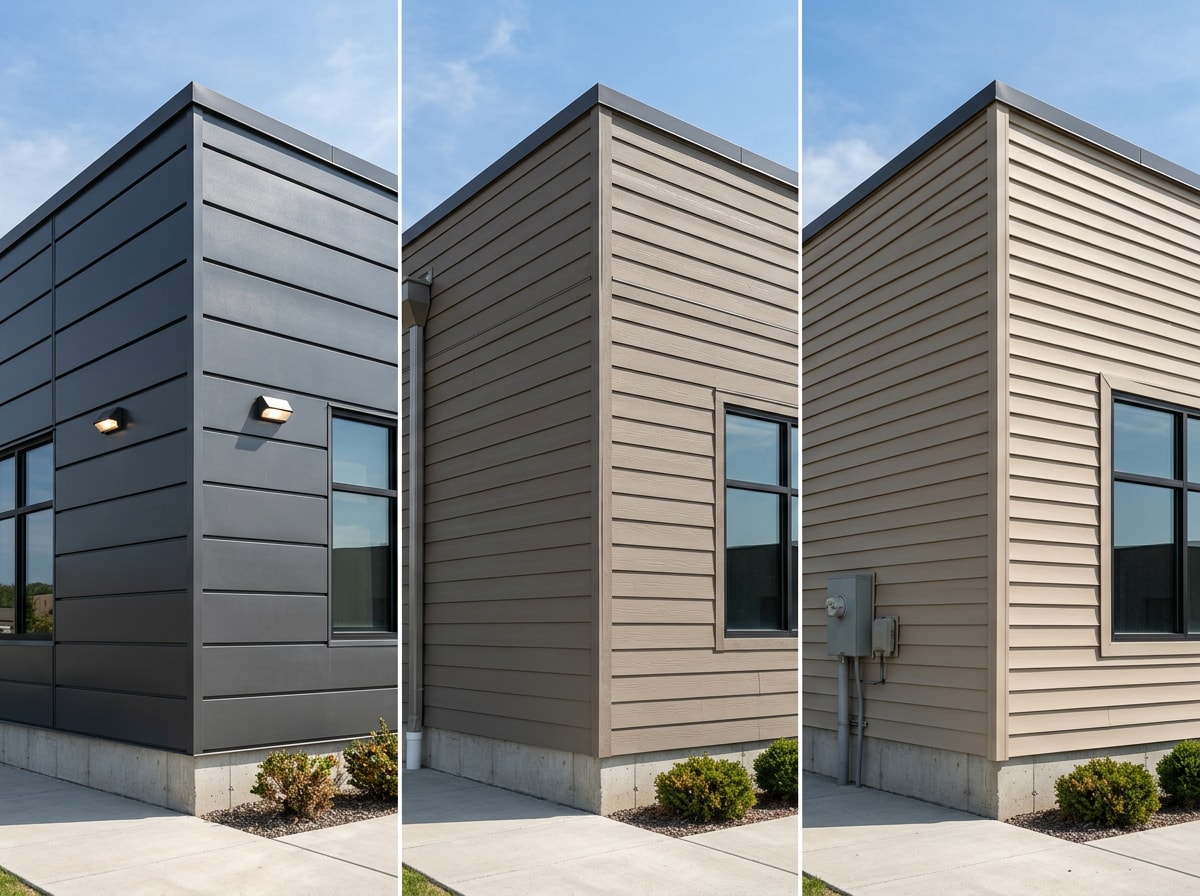
Most commercial buildings in the Woodridge area are sided in one of three materials: metal, fiber cement, or vinyl. A contractor worth hiring should recommend one based on your building type, budget, and the realities of Illinois weather, not push whatever they have the most of in inventory.
| Material | Installed Cost (per sq. ft.) | Typical Lifespan | Best For |
|---|---|---|---|
| Metal | $6 to $16 | 40+ years | Retail, industrial, high-wind exposure |
| Fiber cement | $5 to $14 | 50+ years | Office buildings, multi-tenant properties |
| Vinyl | $3 to $8 | 20 to 30 years | Smaller retail buildings, secondary structures |
Metal Siding
Metal siding is durable, fire-resistant, and low-maintenance, with a clean, modern look that suits retail and industrial buildings alike. Its durability makes it a strong fit for buildings that see heavy wind exposure or need minimal upkeep over decades of Illinois seasonal swings.
Fiber Cement Siding
Fiber cement mimics the look of wood or stone while resisting fire, insects, and moisture far better than natural wood siding. Hardie siding is noncombustible and will not burn, and it resists damage from moisture and holds no appeal for pests like woodpeckers or termites , which is part of why it's become a popular pick for office buildings and multi-tenant properties aiming for a higher-end look without constant upkeep. Manufacturer specs are detailed on James Hardie's product catalog.
Vinyl Siding
Vinyl remains the most budget-friendly commercial siding option. It's a reasonable choice for smaller retail buildings or secondary structures where cost control matters more than premium appearance. That said, vinyl can become brittle in extreme cold, which matters during harsh Illinois winters, and some local jurisdictions restrict its use on certain commercial building types or heights. Confirm with your contractor whether vinyl is actually permitted for your specific project before budgeting around it.
Fire Codes, Energy Standards, and Compliance
The International Building Code governs material flammability, wind resistance, and moisture management for commercial structures, standards that go well beyond what applies to a typical house. Code adoption also varies by jurisdiction within the same metro area. Illinois has adopted the 2021 IBC without amendments statewide, while DuPage County enforces the 2021 IBC with its own local amendments , which is exactly the kind of detail a building owner needs confirmed before finalizing material choices rather than assumed.
The code sorts buildings into Type I through Type V construction classifications, which determine how fire-resistant the exterior envelope, including siding, must be. A Type I high-rise faces far stricter non-combustibility requirements than a Type V wood-framed retail building. Before a project starts, call the Woodridge building or permit department, or check with DuPage County, to confirm which classification and fire-rating requirements apply to your structure.
How to Choose the Right Exterior Commercial Siding
Once you understand the materials and code requirements above, the decision usually comes down to four factors:
- Durability needs. Illinois freeze-thaw cycles and humid summers put real stress on siding, so materials with proven moisture and impact resistance tend to hold up better here than in milder climates.
- Energy efficiency. Insulated panel systems can meaningfully cut heating costs through a Chicago-area winter.
- Budget trade-offs. Vinyl saves money upfront, while fiber cement costs more but often lowers lifetime maintenance spending.
- Architectural fit. Match the siding to your building's style and brand identity, since the exterior is often a customer's first impression.
We serve commercial and residential clients throughout Woodridge, IL and nearby DuPage County communities, including Darien, IL and Downers Grove, IL. If your project also involves a full exterior refresh, our exterior painting services pair well with new siding on trim and accent surfaces. For a deeper look at how commercial general contracting projects come together from permits to punch list, see our guide to commercial general contracting in Elmhurst, IL.
Why Work With Pro One Builders
Pro One Builders is a full-service general contractor based in the western Chicago suburbs, serving commercial and residential clients across DuPage County including Woodridge, Darien, Downers Grove, and the surrounding communities. Our crews have handled phased siding replacements on occupied retail and office buildings, which means we plan around your tenants' hours instead of the other way around. Every estimate includes itemized material and labor pricing in writing, not a verbal ballpark.
Questions about a specific building or timeline? Contact us directly, or visit the Pro One Builders homepage to see our full range of services.
FAQ
What Is the Most Durable Commercial Siding Material?
Materials like metal, fiber cement, and brick are generally considered the most durable commercial siding options, holding up well against impact, fire, and decades of weather exposure. Among these, fiber cement and metal are the most commonly installed on commercial buildings today.
How Can I Reduce Commercial Siding Installation Costs?
Choosing weather- and pest-resistant materials like metal or fiber cement siding can reduce commercial siding costs over time, since their longevity minimizes the need for frequent repairs or early replacement. Lower lifetime maintenance spending often outweighs a higher upfront material cost.
How Is Commercial Siding Installed?
The exact process depends on the material chosen, but most commercial siding installations follow a similar sequence: a site assessment, surface preparation and removal of old material, the actual installation following manufacturer specifications, and a final inspection for code compliance and quality.
How Much Does Commercial Siding Cost?
Commercial siding costs typically range from $3 to $8 per square foot for vinyl, $5 to $14 per square foot for fiber cement, and $6 to $16 per square foot for metal, depending on the product line, building height, and local labor rates. Getting an on-site estimate is the only way to get an accurate number for your specific building.
Do I Need a Permit for Commercial Siding Work in Woodridge, IL?
Most commercial exterior work, including siding replacement, requires a permit from the local building department before work begins. Requirements and fees vary by municipality and by building classification, so confirm directly with the Woodridge building department or DuPage County before scheduling a crew.
How Long Does a Commercial Siding Installation Take?
Timelines depend heavily on building size, material, and whether tenants need to stay operational during construction. A small retail strip might take one to two weeks, while a phased, multi-building office or multi-tenant project can run several weeks to a few months. Ask for a milestone-based timeline in writing before work starts.