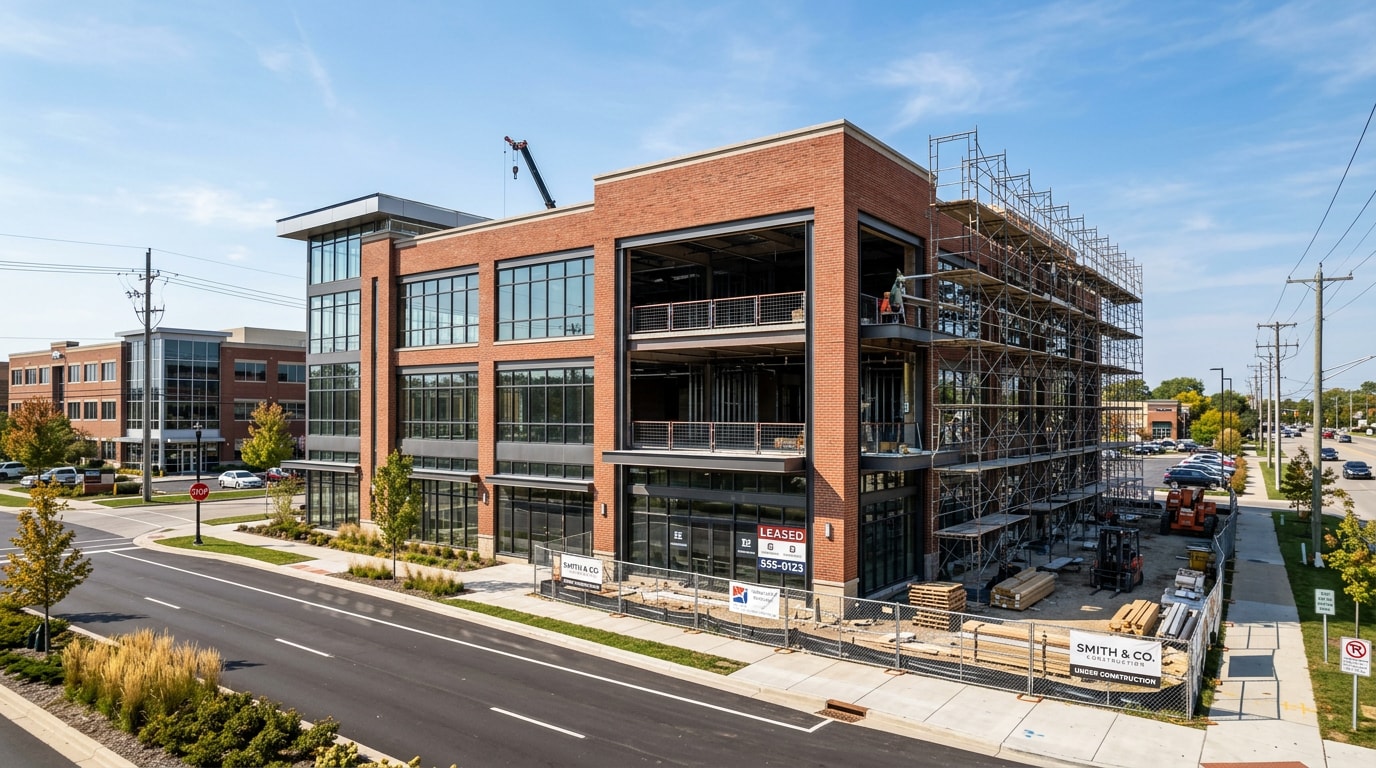
Commercial construction companies in Clarendon Hills, IL need to juggle more than framing and finishes. They need to know the Village's permit process, its code amendments, and how to keep a business open while the work happens around it. This guide breaks down what a reputable commercial contractor actually does here, the services worth asking about, and the local rules that catch out-of-town crews off guard.
What to Look for in a Commercial Construction Company
Most of the results you'll find searching for a contractor in Clarendon Hills are directory listings, not real vetting information. That's a gap worth closing before you call anyone.
A commercial construction company worth hiring brings project ownership from the first phone call to the final walkthrough, not just a crew. Look for:
- A track record across DuPage County suburbs, not just one past job near Clarendon Hills
- Current business licensing and insurance documentation, available on request
- A single point of contact who manages architects, engineers, and inspectors directly
- Experience with the Village's specific permit and inspection process, since local amendments differ from neighboring towns
Our crews have handled tenant build-outs, additions, and renovation work across DuPage County communities, including Clarendon Hills, so we've seen firsthand how much a contractor's local permitting experience shortens a project timeline versus one learning the Village's process for the first time.
Commercial Building Types and Project Scopes in Clarendon Hills
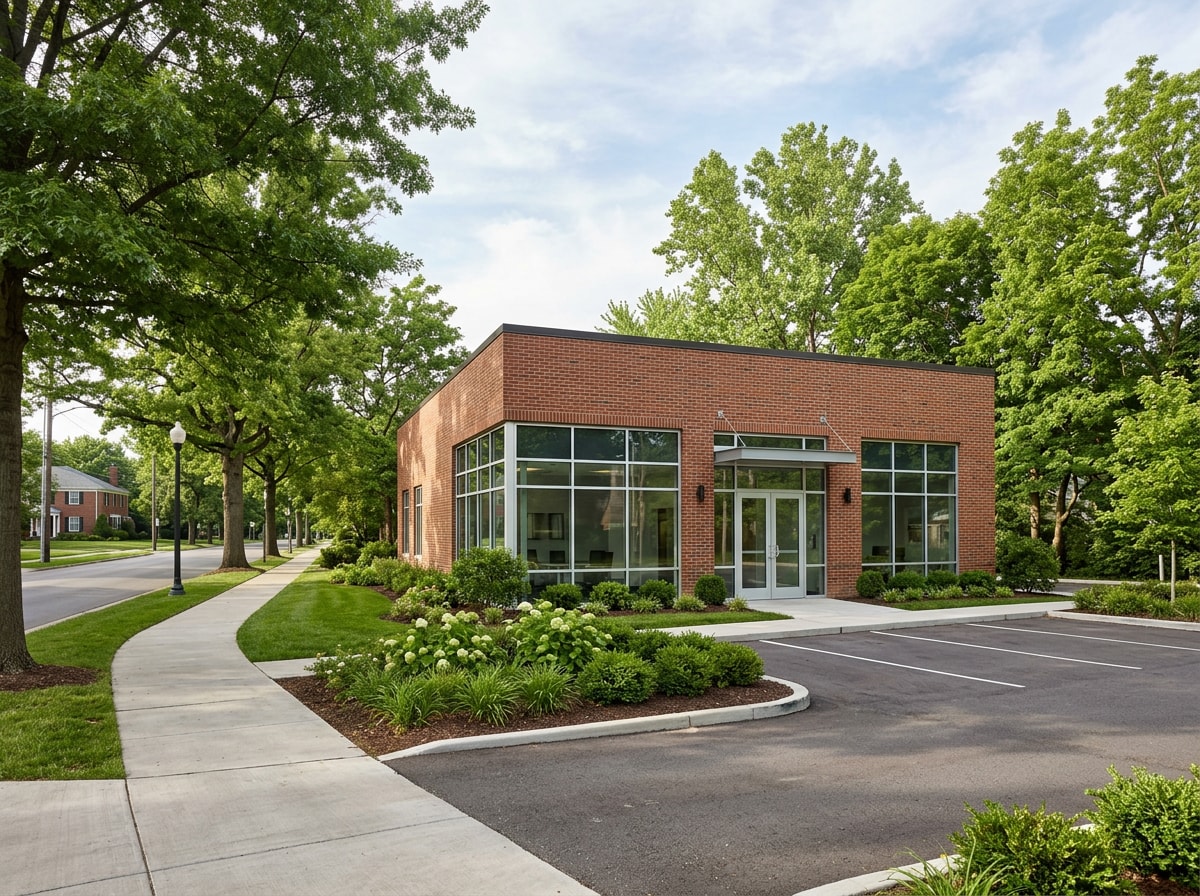
Commercial building types in Clarendon Hills vary widely, and the right contractor should have experience across most of them. A small retail shop on a main corridor has different needs than a medical office or a warehouse near an industrial corridor.
Office construction often involves tenant-facing finishes and ADA compliance. Retail construction focuses on storefront visibility and customer flow. Industrial construction, while less common in the village core, shows up in nearby business parks.
Smaller suburbs like Clarendon Hills tend to see more tenant build-outs and additions than large ground-up industrial projects, which are more typical of bigger Chicagoland sites.
Core Commercial Construction Services
Most commercial construction companies offer three core service types: building from scratch, renovating existing space for a new tenant, and expanding a current facility. Understanding the difference helps you scope your project and budget accurately before reaching out.
Ground-Up Commercial Build
Ground-up commercial construction covers everything from site preparation to the certificate of occupancy, with one contractor accountable for the entire process. In Clarendon Hills, this also means navigating village-specific zoning and setback rules that smaller jurisdictions enforce closely. A single point of contact reduces miscommunication between architects, engineers, and inspectors.
Tenant Build-Out
Tenant build-out work transforms existing commercial space to fit a new business's layout, branding, and function. Common triggers include signing a new lease, rebranding, or shifting to a different use entirely, like converting retail space into a medical office. Because tenant improvement projects often happen while neighboring units stay open, minimizing downtime matters just as much as the renovation itself.
Commercial Additions
Commercial building additions make sense when a business has outgrown its footprint but doesn't need a full rebuild. Growth, new equipment, or added staff can all drive the need for extra square footage. A contractor experienced in commercial expansion will evaluate whether an addition or a move better supports your long-term goals before recommending either path.
How Clarendon Hills Permitting Affects Your Timeline
This is where most out-of-area contractors stumble, and it's the single biggest information gap in generic commercial construction content.
Clarendon Hills regulates construction, remodeling, and additions through its own Municipal Code rather than deferring entirely to DuPage County. The Village Municipal Code establishes rules for constructing, erecting, enlarging, remodeling, altering, and repairing buildings, and anyone planning that kind of work must first apply for and obtain a building permit.
The Village has adopted a specific code package for commercial structures. The Village Board of Trustees has adopted the International Code Council's International Building Code, the National Fire Protection Association's National Electrical Code and Life Safety Code, the Illinois State Plumbing Code, and the ICC International Mechanical, Fire, and Property Maintenance Codes, all with local amendments.
A few specifics worth knowing before you budget:
- Projects combining new construction, additions, and accessory structures that total at least 1,000 square feet of floor area trigger additional requirements for major construction projects, including licensing compliance checks on your contractor.
In addition to the requirements for all building permits, when the work pertains to new construction, demolition, moving, or reconstruction of any principal structure, or any combination totaling at least one thousand square feet of floor area, additional requirements apply.
Commercial electrical service must be a minimum of one hundred amp, single phase or three phase.
Once work is completed, inspected, and approved, the Community Development Department issues either a Certificate of Occupancy or a Certificate of Compliance, and a parkway inspection must also be completed and approved.
- Businesses also need an annual license separate from the building permit.
A business license is required annually for all persons, firms, or corporations doing business in the Village of Clarendon Hills.
A contractor who already knows these thresholds won't lose weeks discovering them mid-project. You can review the Village's own building permit page and contractor and business licensing requirements directly before scoping your project.
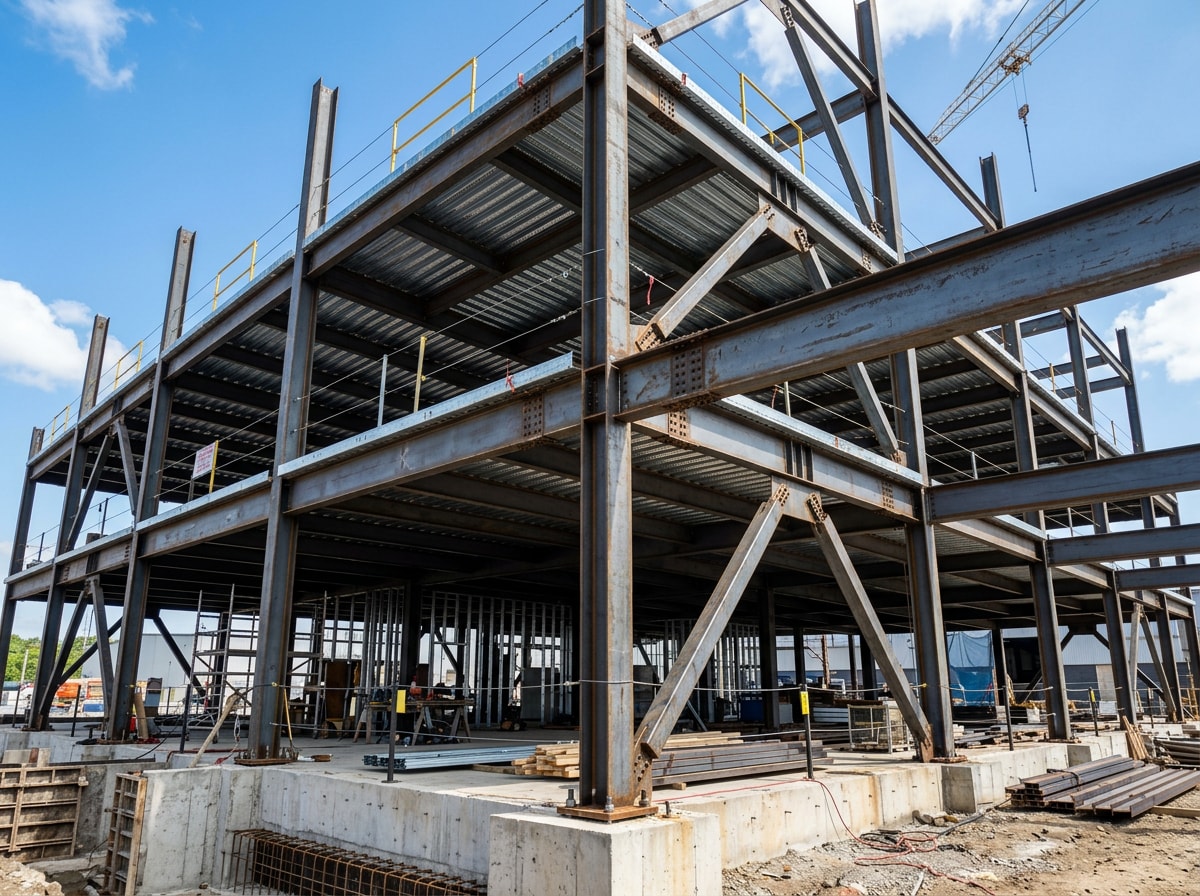
Typical Commercial Construction Timeline
A reliable commercial construction process moves through four phases. Each stage has a different owner: your contractor leads design coordination and permitting, while you weigh in on budget and scope decisions.
| Phase | Typical Duration | Who Leads It |
|---|---|---|
| Needs assessment | 1–3 weeks | Owner + contractor |
| Design & permitting | 4–12 weeks | Architect + contractor |
| Construction | 8–24+ weeks | General contractor |
| Closeout & inspections | 1–3 weeks | Contractor + inspector |
These ranges shift based on project size. A small tenant build-out lands on the shorter end, while ground-up builds stretch longer, especially once the 1,000-square-foot threshold noted above pulls in extra review.
Licensing, Insurance, and Vetting Checklist
Before you sign anything, confirm the basics:
- Business and contractor licensing - verify current standing with the Village rather than taking it on faith
- Insurance documentation - general liability and workers' comp coverage, provided in writing
- References from recent local projects - ideally similar scope and building type
- A written timeline with milestones tied to the phases above
- Clear change-order terms - how pricing shifts get documented and approved
- Warranty terms - how long the contractor stands behind the work after closeout
A commercial general contractor coordinates every trade on a project, including plumbing, electrical, and framing, without necessarily performing the labor themselves. Construction managers, often called general contractors or project managers, coordinate and supervise a variety of projects, and either a general contractor or construction manager oversees the construction phase of a project, including personnel. Their role covers permitting, scheduling, and subcontractor management from start to finish, a scope the U.S. Bureau of Labor Statistics outlines in its Construction Managers occupational profile.
Ready to put this checklist to use? Request a free estimate and walk through your specific scope with our team before you commit to a contractor.
Serving Clarendon Hills and Nearby DuPage County Communities
We work throughout Clarendon Hills and the surrounding suburbs, including Hinsdale, Western Springs, Oak Brook, and Downers Grove. If your commercial project is just outside Clarendon Hills, there's a good chance we already know the permitting process for your town too. For a closer look at how we scope and manage general contractor work, visit our general contractor services page.
If your project leans more toward a full commercial build rather than a tenant improvement, our guide to commercial general contracting in nearby Elmhurst covers how to vet a full-service GC for a larger scope.
This guide is maintained by the ProOne Builders team, a general contractor serving Clarendon Hills and the greater DuPage County area. We're happy to walk through Village-specific permitting questions on a free consultation before you commit to a scope or budget.
FAQ
How do I choose a commercial construction company in Clarendon Hills?
Check licensing and insurance directly with the Village rather than taking a contractor's word for it, review past project portfolios in similar building types, and compare at least three estimates. Ask for references from recent local clients before signing anything.
What questions should I ask commercial construction companies?
Ask how long they've worked in Clarendon Hills specifically, whether they hire subcontractors or keep crews in-house, and for references from similar past projects. Request a realistic timeline and clarify how labor rates and change orders get billed before work begins.
What does a commercial general contractor do?
A commercial general contractor coordinates every trade on a project, including plumbing, electrical, and framing, without necessarily performing the labor themselves. Their role covers permitting, scheduling, and subcontractor management from start to finish.
How long does commercial construction take in Clarendon Hills?
A tenant build-out typically wraps in six to twelve weeks. A ground-up commercial building can take six months or longer once permitting and site work are factored in, especially if the project crosses the Village's 1,000-square-foot threshold for major construction requirements.
Do I need a permit for a commercial remodel in Clarendon Hills?
Yes, in most cases. Permits and inspections are required for new construction, demolitions, additions, structural alterations, and most remodeling projects, and electrical and plumbing work requires permits. Interior redecorating without structural, electrical, or plumbing changes is generally the exception.
Who handles commercial building permits in Clarendon Hills?
The Community Development Department is responsible for development plan review, permit issuance, and code inspection services for all new construction and remodeling projects in the Village, and applications can be submitted electronically or in person at Village Hall.
Still comparing contractors for a Clarendon Hills project? Start a conversation on our homepage or go straight to requesting a free estimate.